Five minutes is not much. It is enough, though, to cut three stems, drop them into a small jug, and set the jug somewhere you will pass a dozen times before lunch. That is the whole practice: no centrepiece, no trip to a flower market, no arrangement you have to photograph from four angles before it counts.
Weekday flowers usually fail for a boring reason. We save them for occasions, buy a big bunch, reach for a vase that needs a full armful to look right, then run out of time. The fix is smaller and faster than most people expect.
Start Smaller Than Feels Right
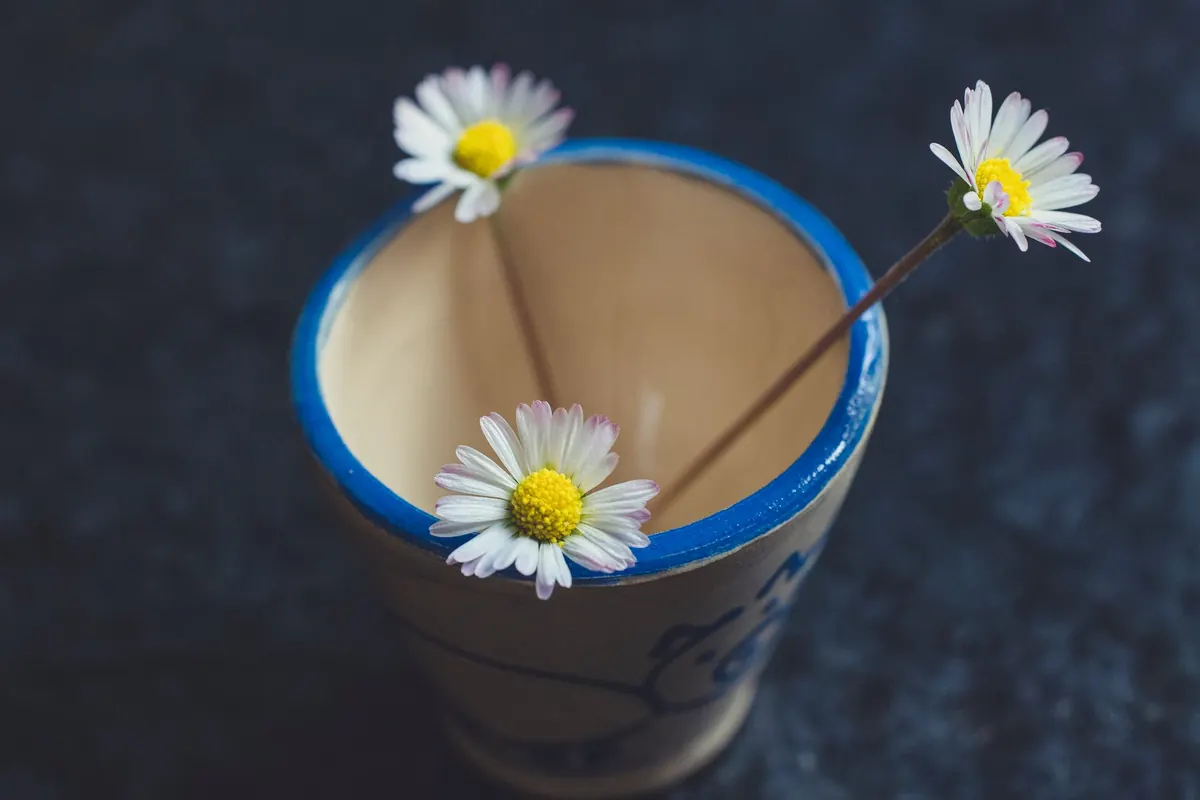
A small vessel is a shortcut, not a compromise. A jam jar, a milk bottle, a straight-sided tumbler, a narrow-necked bud vase bought years ago — anything holding one hand's worth of stems is easier to fill well. Three stems in a jar look intentional. Three stems in a big vase look like you gave up halfway.
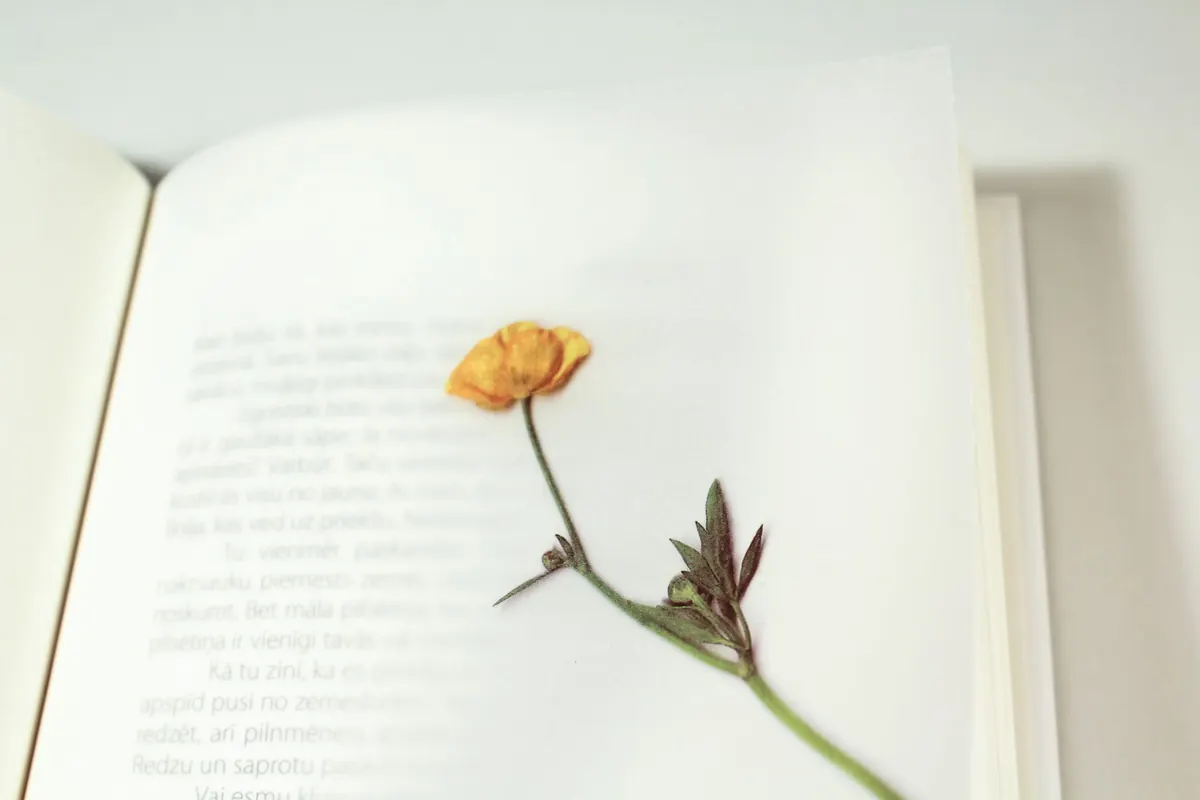
Short stems help too. Cut them so the flowers sit just above the rim rather than towering on a long, wobbling neck. Short stems need less support, less space, and fewer filler flowers to prop them up. A single stem of ranunculus in a small bottle can carry an entire windowsill.
Small arrangements are also forgiving. If a stem flops, turn the jug a quarter turn. If a leaf browns, pull it out. Nothing about a five-minute arrangement is permanent, and that is exactly why it is easy to make one on a Tuesday.
The Kit That Lives on a Tray
Speed comes from having things where your hands already are. Keep a small kit together so that setting up involves no decisions:
- A small vessel or two — a jar, a bottle, a tumbler, a little ceramic jug.
- Sharp scissors or floral snips. Kitchen scissors work; blunt blades crush stems.
- A jug or measuring cup for water, so you are not carrying the vase to the tap.
- A cloth for the inevitable drip.
- Whatever stems you have.
That is the whole list. No floral foam, no tape grid, no chicken wire at this scale. Those tools earn their keep in bigger work; here they only slow you down.
The Five-Minute Sequence
Set a timer the first few times, just to learn the pace. Then put it away.
- Clear a square of counter about the size of a dinner plate. Move the mail aside. Thirty seconds.
- Fill the vessel two-thirds with cool water and stand it on the counter, not in the sink. Thirty seconds.
- Cut and strip. Take two or three centimetres off each stem at an angle and remove any leaves that would sit below the waterline. One minute.
- Place the tallest stem first, slightly off-centre, and let it lean. One minute.
- Add the second stem, cut shorter, angled the other way. Then the third, shorter still. Two minutes.
- Top up the water, wipe the rim, carry it to its spot, and stop. Thirty seconds.
Why the angle matters, and why leaves must come off
A slanted cut exposes more stem surface to water and stops the base from sitting flat against the bottom of the vessel. Cut in one clean motion with sharp blades; a crushed stem drinks poorly. Leaves left underwater rot quickly, and the water turns cloudy within a day.
If you have time for one extra habit, cut stems while they are held in a bowl of water, or plunge them straight into the filled vessel. It keeps air out of the stem. It is a small thing, and it makes a visible difference to how long the flowers hold.
Four Rules That Keep It Fast
Speed is mostly a matter of refusing to make decisions halfway through. These four rules remove most of them.
- Work in odd numbers. Three or five stems, not four. Odd numbers sit more easily and look less like pairs waiting to be matched.
- One colour family, one texture. Three stems of the same flower, or two of one and one of another. Five varieties at this scale look muddled and take longer to rescue.
- Let one stem be the star. Tallest, brightest, most open. Everything else supports it. If you cannot tell which stem that is, the arrangement will feel vague.
- Stop at good enough. The last ten percent — nudging a petal, rotating a leaf — is where five minutes quietly becomes twenty. Step back, look once, walk away.
Choose the Landing Place Before You Start
The arrangement needs a destination, and deciding on it in advance removes the wandering-around-the-house phase. Good spots are ones you already look at: the kitchen windowsill above the sink, the corner of a desk, the bathroom shelf, the table where you drop your keys, the bedside table you see first thing.
Keep the spot modest. Anywhere a glass of water would survive is somewhere a small jug will survive — not the middle of a table that gets cleared three times a day, and not a high shelf you will forget by Wednesday.
If the spot happens to be where you make coffee, so much the better. You will notice the flowers eleven times before nine o'clock. The five minutes of arranging is pleasant, but the noticing is what actually changes the texture of a weekday.
For the Days When There Is Nothing to Cut
Some weeks there is no bunch in the fridge and no time to buy one. There is usually still something: a sprig of rosemary from a pot on the windowsill, a stem of basil that needs pinching back anyway, a single ivy leaf, a flower the wind knocked off, a branch from a shrub in your own garden.
Two guidelines. Take only what the plant can spare — a sprig, not an armful — and cut cleanly with scissors rather than pulling. And never cut from a park, a roadside planting, or a neighbour's hedge without asking; it is somebody's work, and in many places it is not permitted in the first place.
If you do buy a bunch at the weekend, split it. Three small jars on Monday, Wednesday and Friday will give you more days of flowers than one large arrangement that dies all at once on Thursday.
Keeping the Practice Alive
Attach the five minutes to something that already happens, because a free-floating intention is the first thing to go when the week tightens. While the kettle boils. While the pasta water comes up. After the plates are cleared. Before you open the laptop. The habit needs an anchor more than it needs willpower.
Expect to skip days. A weekday ritual that happens three times out of five is working. The arrangement does not need to be good, and nobody is grading it. If the stems droop by Thursday, pull them out, rinse the jar, and begin again on Friday with one flower.
There is a shorter version for the worst days: one stem, one small vessel, thirty seconds. Fill it, cut it, put it where you will see it. That counts. The point was never really the flowers — it is the pause, and the pause can be very small.
Photo: Markus Spiske / Pexels