There is a particular kind of entry that appears in a good garden journal around the third week of February: one crocus open by the south wall, 9:40 a.m., six degrees, wind from the east, ground still frozen two inches down. Nothing in that sentence is remarkable. Written again in March, and April, and the following winter, it becomes something no garden book can give you: a record of how your own patch of ground moves through a year.
A twelve-month flower and weather journal is not a large project. It is a small one, repeated. The work is in the setup and the rhythm — enough structure to make the entries happen, not so much that they start to feel like homework.
Start Now, Not on January First
The commonest reason these journals stall is the decision to begin on the first of January. If you are reading this in June, with the roses going over and the first cosmos just opening, waiting six months is a reliable way never to start at all. A year is a loop. Step onto it wherever you happen to be standing, date the page, and let the loop close when it closes.
What matters is one complete turn, not tidiness with the calendar. A journal that runs from late May to late May tells you precisely what late May looks like in your garden — and it tells you twice.
Starting mid-year has another advantage: you begin with something already happening. The first entry can be as simple as first cosmos open, pale pink, by the shed; warm and still after rain. Eleven months later, when you reach the same week again, that page gives you a comparison rather than a blank. You will know whether the cosmos came earlier, later, or at the same time, and whether the ground was wet or dry when it did.
Set Up a Notebook That Can Take Rain
Weather journals get carried outside. They get set down on wet stone, dropped in the beds, and used to fend a wasp off a glass of water. If the notebook is too handsome to risk, it will stay indoors, and a journal that stays indoors never records rain.
A plain A5 notebook with a sewn binding and a stiff cover is enough. So is a pocket notebook, provided you commit to one book for the whole year — loose sheets and phone notes scatter and lose their order. Add a pencil, which writes in cold and damp when ink gives up, and a small zip bag to keep both dry. A pencil also survives being dropped, chewed by the dog, and left on the greenhouse bench overnight.
Keep the kit small enough to live by the back door: notebook, pencil, and perhaps a short ruler for sketching a bed or measuring snowfall. If you prefer to make quick notes on a phone, treat the phone as a temporary pocket and copy the notes into the paper journal once a week. The paper remains the record. Batteries fail; a pencil line from last March does not.
Give Each Week a Simple Shape
Daily entries sound admirable and are usually abandoned by the second wet Tuesday. One page per week is enough for most gardens, with extra notes added whenever something insists on being noticed. At the top of the page, write the date range. Down the left margin, put the days. Leave a narrow column for firsts and lasts, and the rest of the page for weather, flowers, and one line of context.
Week of 17–23 March. Mon: mild, 12 degrees, soft rain till noon. Tue: first celandine open in the hedge bank. Wed: cold east wind, no growth. Thu: 6 degrees at 7 a.m., frost on greenhouse. Fri: plum blossom fully out, bees at noon. Sat: heavy shower, 14 mm. Sun: first primrose by the path; ground workable by afternoon.
That is not a literary entry, and it does not need to be. Its value is in the pattern: the cold east wind, the frost, the sudden bee, the workable ground. Written for fifty-two weeks, it becomes a calendar of your own weather and your own plants, with all the local exceptions that no printed guide can predict.
What to Record Without Overthinking It
A journal becomes useful when the same few things are recorded in the same few ways. You do not need to capture everything. Aim for a short, repeatable list:
- Date and time. A time matters more than you expect. Frost at 6:40 a.m. is a different observation from frost sometime overnight.
- Weather at the moment. Temperature, cloud, wind direction, rain, and ground conditions. Cold, bright, wind from the north, ground frozen two inches down says more than cold.
- Firsts and lasts. First crocus, first bee, first swallow, last frost, last rose, first leaf fall. These are the spine of the journal.
- Flowers in bloom. Keep a short list rather than an exhaustive census. Name the plant, note whether it is bud, first flower, full bloom, or going over, and add anything odd — a double flower, a broken stem, a plant flowering out of season.
- One sentence of context. What you did, noticed, or failed to do. Planted out the sweet peas; soil still cold. Forgot to close the cold frame; no damage. This is the line that makes the record yours.
Do not try to record every flower in the garden. Choose a core dozen — the ones you would miss if they vanished — and note the rest when they surprise you. A journal is not an inventory; it is a set of clues. Too much detail and you will stop writing. Too little and the page will not remind you of anything.
Weather Without a Weather Station
You do not need to become a meteorologist. Three inexpensive things will carry most of the record: a maximum-minimum thermometer, a simple rain gauge, and the notebook itself. If you have none of these, use the nearest official weather record for temperature and rainfall, and concentrate on what you can see from the door: wind direction, cloud cover, frost, fog, snow, and the state of the ground.
Ground conditions deserve their own note. Soil temperature drives germination more than air temperature does, and a cold wet spring can hold back plants that a warm air thermometer would suggest are ready to grow. Write ground workable, sticky, frozen at surface, dry to two inches, or waterlogged in the low corner. These phrases will explain more failures and successes next year than any average monthly temperature.
Rain is best recorded simply: none, enough to wet the path, enough to fill the saucer, or a measured amount if you have a gauge. Wind can be recorded by direction and by effect — east wind, cold, greenhouse door banging is a perfectly good observation. The aim is consistency, not precision for its own sake.
Photographs and Pressed Flowers, Used Sparingly
A photograph can be a useful companion to the written page, provided it does not replace it. Choose one fixed view — the same corner of the garden, from the same step, at roughly the same time each week — and take a single photograph. That sequence will show you the shape of the year more clearly than a hundred scattered close-ups. Add occasional close-ups of first flowers, damaged leaves, or unfamiliar seedlings, and label them with the date.
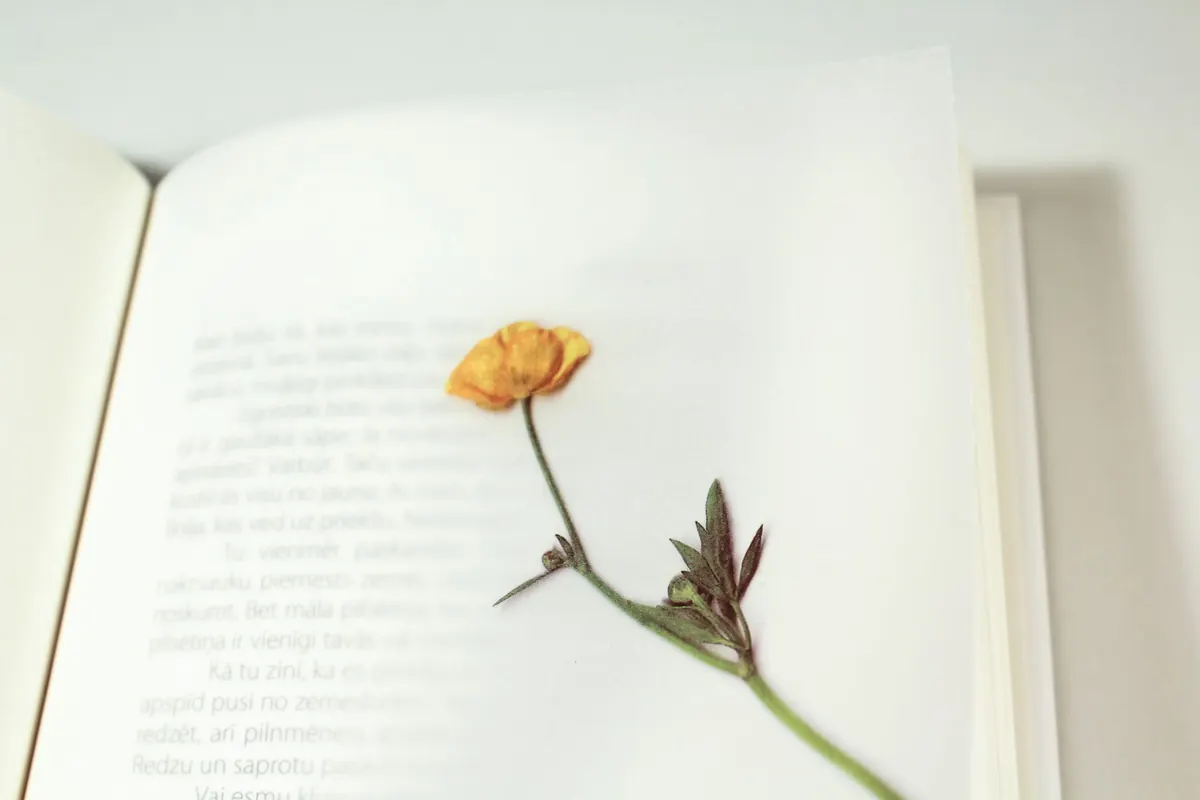
Pressed flowers are pleasant but optional. If you press one, do it for a reason: the first hellebore, the last nasturtium, a flower that opened on an unexpected day. Label it with the date and the weather, and keep it in an envelope tucked into the back of the notebook. Do not let the craft of pressing swallow the record. The written entry is the thing you will read again.
Read the Year Backwards
When the loop closes, set aside an hour before starting the next year. Read the journal backwards, from the last page to the first. Reading in reverse makes transitions visible: the week the light changed, the fortnight when everything stalled, the sudden flush after rain. Mark the firsts and lasts with a star in the margin. Then write a one-page summary at the back: last frost, first frost, wettest month, driest spell, best week for bloom, worst week for wind.
That summary is what turns a notebook into a tool. Next spring, you will know whether to wait a week before sowing, whether the cold frame needs closing earlier, and which flowers earned their space. The second year is richer than the first because you are no longer starting from nothing. You are arguing with your own record, and the garden is answering.
Keep the journal small enough to continue. Miss a week, draw a line through the empty days, and carry on. The point is not a perfect archive. The point is to notice one crocus by the south wall, write it down, and be able to meet it again next year with a little more knowledge than you had before.