Poppies have a reputation for being difficult, and most of it is undeserved. What they actually dislike is being fussed over — lifted, divided, moved around, fed like tomatoes. Give them a pot deep enough for their taproot, a sunny corner, and compost with a little grit through it, and one pinch of seed can fill a balcony with flowers that look painted by hand. The trick is timing. What follows is a month-by-month plan for raising annual poppies in containers, from the first sowing to the seed you shake into a paper bag at the end of summer.
Start with the Right Poppy
Not every poppy belongs in a pot. Oriental poppies (Papaver orientale) are large, floppy perennials with thick fleshy roots; they sulk in containers and are usually bought as plants. For a balcony or patio, stick to the annuals, which germinate quickly, flower in their first year and ask for very little:
- California poppies (Eschscholzia californica) — silky orange and cream cups, fine grey-green foliage, and the most forgiving of the group. They will flower in a pot that is only 15cm deep.
- Shirley poppies (Papaver rhoeas) — the field poppy in soft reds, pinks and whites. Taller and airier; give them a sheltered spot so the stems don't snap in wind.
- Opium poppy (Papaver somniferum) — the big, blousy, grey-leaved one with enormous seed pods. Superb in pots, but growing it is restricted in some countries, so check your local rules before you sow.
All three share the trait that matters most in container growing: a taproot. A poppy sends one strong root straight down and builds everything else around it. Disturb that root and the plant stalls for weeks, sometimes for good. Which leads to the single most useful rule in this guide: sow where you intend the plant to flower.
Pots, Soil and the Taproot Problem
Because there is no pricking out and no potting on, the container you sow into is the container the poppy lives in. Choose it with the taproot in mind. Depth matters far more than width. A pot 25–30cm deep suits the taller annual poppies comfortably; California poppies will manage in 15–20cm. Width is about how many plants you want: roughly one poppy per 10–15cm of surface, so a 30cm-wide pot holds three or four.
Drainage holes are non-negotiable. Poppies tolerate dry far better than wet, and a waterlogged pot in winter will kill seedlings that survived everything else. Stand pots on feet or broken tiles so water can leave freely, and leave the saucer off except during germination.
For compost, lean and free-draining beats rich and luxurious every time. Rich soil grows lush leaves and very few flowers. Mix two parts peat-free multipurpose compost with one part horticultural grit or coarse sand, and add a handful of leafmould if you have it. Skip manure, skip slow-release feed, skip anything that promises giant blooms. Terracotta or plastic both work; terracotta dries out faster, which is helpful in a damp climate and a nuisance in a hot, exposed one.
The Month-by-Month Calendar
Poppies germinate best in cool, moist conditions and flower fastest in long days, so the sowing window is wider than most beginners expect. Adjust by a few weeks either way depending on how cold your winters are.
February to March
Sow your first pots under cover: an unheated porch, a cold frame, a windowsill that stays cool. Use the final pots and place them somewhere bright but frost-free. California poppies are the toughest of the three and can go out earliest. Germination is slow and steady at this time of year — expect two to three weeks, sometimes more.
April to May
The main sowing window. Sow direct into pots outdoors once the soil has warmed and hard frosts have passed. Seedlings appear in ten to fourteen days. This is also when slugs do their worst damage, so patrol in the evenings or scatter a barrier around the pots.
June to July
Sow a second batch for late-summer and early-autumn flowers. The first sowings will be blooming now; deadhead regularly to keep them going, but leave one or two pods on the earliest plants so you can collect ripe seed in a few weeks.
August to September
Collect seed from dry pods and store it in paper envelopes somewhere cool. In mild areas, sow again in late August or September for sturdier plants that will flower earlier next summer than anything sown in spring.
October to January
Autumn-sown pots need protection from sitting wet: raise them off the ground, move them against a wall, and remove any fallen leaves. Otherwise, this is the quiet season. Clean pots, order seed, and make a note of which colours you want more of.
Sowing: The Ten-Minute Method
- Fill the pot nearly to the rim with the grit-and-compost mix and firm it very gently. Water and let it drain.
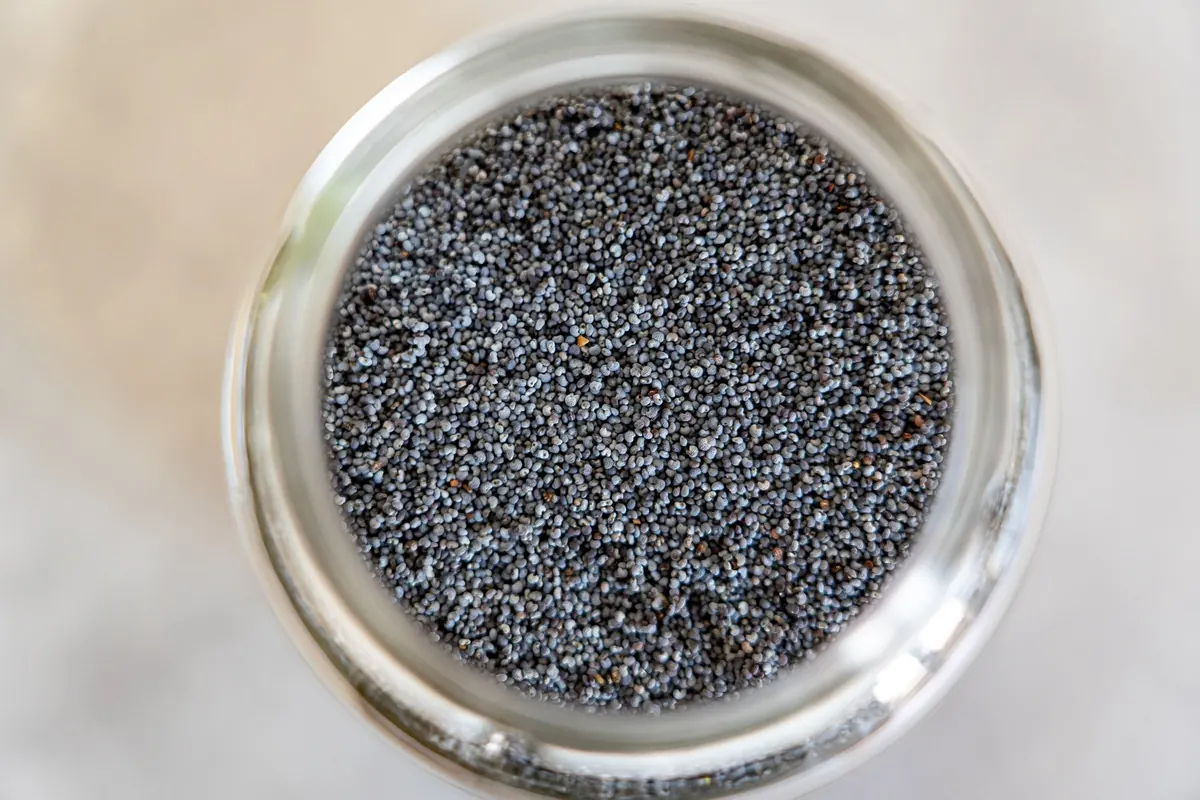
- Scatter seed thinly across the surface. Poppy seed is tiny; a pinch per pot is plenty. Aim for roughly one seed every 2cm.
- Press the seed into the compost with the flat of your hand. Do not bury it — most poppies need light to germinate. A dusting of vermiculite is enough cover, and none is fine too.
- Water with a fine mist or stand the pot in a tray of water for ten minutes. A watering can will wash the seed into a corner.
- Label it — variety and date — and keep the compost moist, never soaked, until germination.
Thinning, Light and Watering
Thin early and be ruthless
Crowded seedlings grow into weak, spindly plants that flower late or not at all. When the seedlings are about 3cm tall, thin them to 10–15cm apart. Snip the extras at soil level with small scissors rather than pulling — pulling disturbs the roots of the ones you are keeping.
Give them real sun
Poppies want at least six hours of direct light a day. Seedlings that lean towards the window are telling you something, so rotate pots a quarter turn every few days and move them closer to the glass or the balcony edge.
Water deeply, then wait
Once the seedlings are established, water thoroughly and then let the top couple of centimetres dry out before watering again. Shallow daily sprinkling produces shallow roots and mildewy leaves. Water the compost, not the foliage, and do it in the morning where possible.
Troubleshooting Small-Pot Poppies
- Long, pale, floppy seedlings — not enough light. Move them into brighter conditions straight away.
- Seedlings collapsing at the base — damping off, usually from cold, wet, airless compost. Water less, improve drainage, remove the affected plants.
- Plenty of leaves, few flowers — too much richness or too much shade. Stop feeding and reassess the position.
- Aphids on stems and buds — a firm blast of water every few days usually keeps them in check.
- Snapped stems after wind — stake with a short bamboo cane and a loose loop of twine. Loose matters; brittle stems resent being strangled.
Sow More Than You Think You Need
Poppy germination is uneven, and some seed will simply not come up. Sow two pots where you wanted one, or scatter twice as much seed as feels sensible, and thin hard later. It costs you almost nothing and saves you the frustration of a half-empty balcony in June.
Then leave a few pods on the plants at the end of the season, let them turn papery and brown, and tip the seed into an envelope. Next February you can start the whole cycle again from a pot on the same balcony, with seed that has already proved it grows where you live.
Photo: Castorly Stock / Pexels