Poppies look effortless in a meadow and slightly reckless on a balcony. The stems are wiry, the petals thin enough to read light through, and one gust at the wrong moment can leave a pot looking like a dropped bouquet. That is no reason to leave them out of your planting. It is a reason to plan the balcony version properly, because a poppy in a container has no meadow to fall back on. Ten checks, then — done once before you sow, and repeated in June when the stems are up.
The Ten Points at a Glance
Read this list first. The sections that follow explain the points that most often go wrong.
- Six hours of direct sun at the height of summer, measured rather than guessed.
- A drainage hole in every pot, plus feet to lift it off the tiles.
- Depth: around 30 cm for annual poppies, 45 cm or more for oriental poppies.
- A free-draining, lean mix — loam and grit, not rich potting compost.
- Wind protection that filters the air rather than blocking it.
- Sowing in place, because poppies resent being moved.
- Water that reaches the bottom of the pot, followed by a proper dry spell.
- Companions of similar height and similar appetites.
- No saucer left standing full of water.
- Restraint with fertiliser, which buys leaves instead of flowers.
Light First, Everything Else Second
Poppies are open-ground plants. They evolved with sun on their faces from morning to evening, and a balcony that gives them four hours will produce pale, stretched stems and a handful of flowers that open and shut in a blink. Six hours of direct summer sun is the working minimum; eight is better.
Do not estimate it. Pick a day when you will be home and check the intended spot at nine, at noon, at three and at six. Two things surprise people. The balcony above yours throws a shadow in high summer that was not there in April. And a south-facing wall bounces heat back onto the pots, which poppies enjoy at the root but not at the leaf — a spot with sun and a little air moving through it beats a hot corner every time.
If your balcony faces north, be realistic. Corn poppies and Shirley poppies will sulk. California poppies tolerate a bright but shaded position better, though they lean hard towards the light and you will spend the season turning pots. A half-shaded balcony can still work if you choose California poppies and accept a looser, more sprawling look, turning the pot a quarter-turn every few days to keep the stems from committing entirely to one direction.
Pots: Depth, Drainage and the Weight Question
How deep does the container need to be?
Poppies send down a taproot before they do anything interesting above ground. Give annual corn and Shirley poppies a pot at least 30 cm deep — 35 cm is kinder. Oriental poppies are perennials with thick, fleshy roots; they want 45 cm of depth and a pot wide enough for the clump, and you should expect the foliage to vanish in mid-summer before it returns.
Skip the shallow bowl, however pretty it looks in the shop. A poppy in 15 cm of compost will flower, briefly, and then spend the rest of its life thirsty.
Drainage you can actually see working
One generous drainage hole beats four mean ones. Cover it with a shard of broken pot or a square of mesh to stop compost washing through, then stand the pot on feet or two bricks. A pot sitting flat on tile seals its own drainage hole with a film of water, and poppy roots in a permanently wet pot rot quietly, without any drama to warn you. The first sign is usually a yellowing lower leaf and a pot that feels heavy days after watering. By then, the taproot is already unhappy. Lift the pot, check the hole, and water less often but more thoroughly.
Weight and balustrade safety
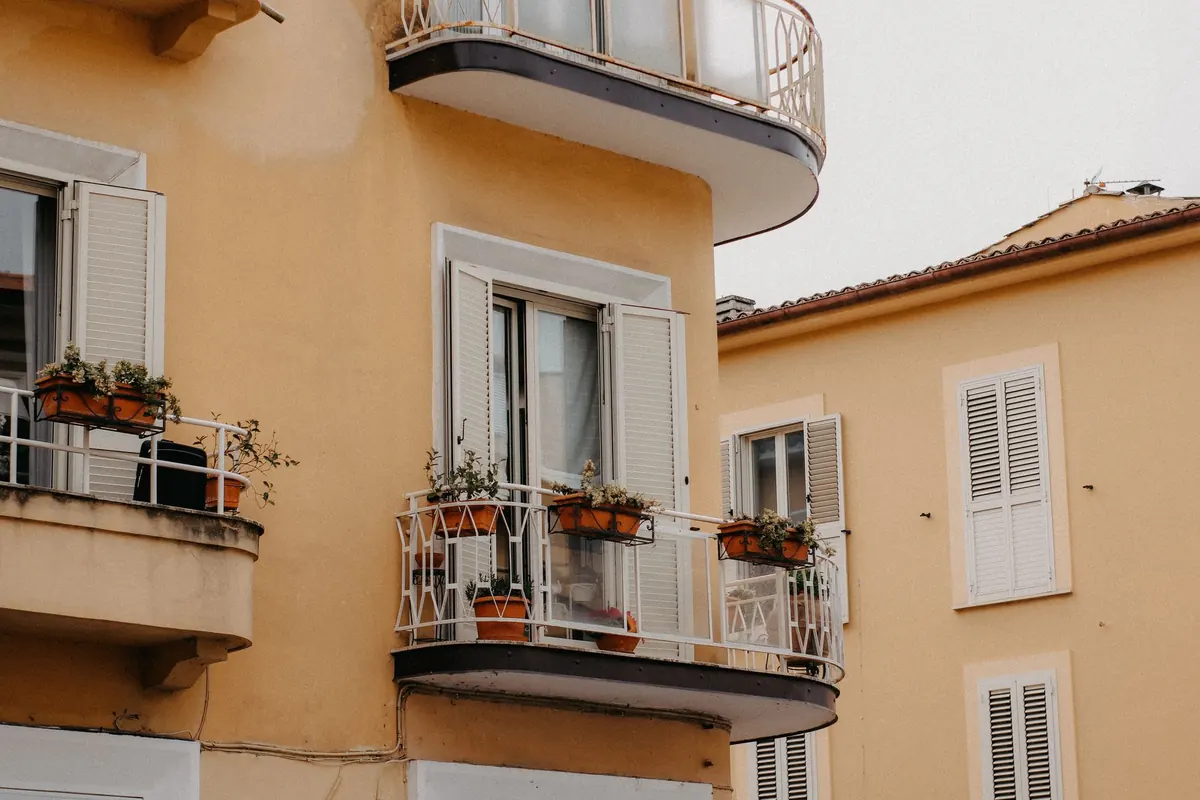
A 45 cm pot full of damp loam and grit is not a lightweight object. It can weigh 35–45 kg when wet, and that matters on a balcony. Put the heaviest pots over a load-bearing wall or near the corners, not on a thin decorative ledge. Use plastic or fibreglass pots instead of glazed ceramic if weight is tight, and never hang a pot over the railing where a gust can turn it into a missile. The checklist is about poppies, but a poppy-friendly balcony is still a balcony first.
Soil, Feeding and the Lean Mix
Poppies are not greedy. They want a free-draining, lean mix that lets water pass through and roots run deep. Use a loam-based compost mixed with horticultural grit — roughly two parts compost to one part grit — and avoid rich potting compost, manure and slow-release feed. A lean mix may sound unkind, but it is what keeps the stems sturdy and the flowers coming.
Restraint with fertiliser is point ten for a reason. If leaves are broad, dark and abundant but flowers are few, you have fed them like tomatoes. Stop feeding, water deeply once, and let the pot dry between waterings. Poppies respond to lean conditions by putting their energy into blooms; rich conditions persuade them to build a leafy hedge instead.
Watering follows the same logic. Water until it runs from the drainage hole, then leave the pot alone until the top few centimetres are dry. A saucer left standing full of water is the quickest way to undo the drainage you built. If you use a saucer to protect the tiles, empty it after every watering and after rain.
Sowing in Place, and the Problem with Transplants
Poppies resent being moved. Sow annual poppies directly where they are to flower, scatter thinly, cover lightly, and keep the surface moist until germination. Thin the seedlings to 15–20 cm apart by snipping the extras at soil level rather than tugging them out; pulling disturbs the roots of the seedlings you want to keep.
Oriental poppies are usually bought as plants rather than raised from seed on a balcony. Plant them in autumn or early spring, water them in, and then leave the crown alone. They dislike being divided and they dislike wet winter feet, so the drainage check matters as much for them as for the annuals.
Timing matters too. Corn poppies can be sown in early spring or late autumn in mild areas. Shirley poppies are best sown in early spring for summer flowers. California poppies are quick from seed and can be sown once the worst of the cold has passed. Whichever you choose, mark the pot and keep the surface from drying out completely until the first true leaves appear.
Wind, Companions and the June Recheck
Wind protection should filter, not block. A solid screen creates a downdraft behind it and can do more damage than open air. Use mesh, a slatted trellis, or a row of companion plants to break the force of the wind while still letting air move through. Poppies with wiry stems need to feel a little breeze; they just do not need to be sandblasted.
Companions should have similar height and similar appetites. Good partners include nigella, cornflower, calendula and a compact ornamental grass. Avoid heavy feeders and vigorous sprawlers that will steal the light and the water. A pot of corn poppies with a few nigella among them looks relaxed rather than regimented, and both plants like the same lean, sunny conditions.
In June, walk the balcony with the ten points in mind. Check that the drainage holes are clear, that no saucer is holding water, that the stems are not leaning into a hot corner, and that the pots have not been pushed into the shade by new growth. A five-minute recheck in June prevents most of the disappointments that show up in July.
Troubleshooting: What the Plants Tell You
Poppies are not subtle. They show you what is wrong if you know what to look for.
- Long, pale stems and few flowers: not enough direct sun. Move the pot or accept that the spot is wrong for poppies.
- Yellow lower leaves and a sour smell: wet feet. Clear the drainage hole and stop using a saucer.
- Huge leaves, no buds: too much feed. Stop feeding and let the mix run lean.
- Flowers that open and shatter in a day: wind or reflected heat. Add filtered protection and move the pot away from a hot wall.
- Small flowers in a shallow pot: the taproot has run out of room. Repot into a deeper container for next season.
A Simple Balcony Plan
If you are starting from nothing, keep it simple.
- Place a 35 cm pot of corn poppies in the sunniest spot, on feet, with no saucer.
- Set a 45 cm pot of oriental poppies against a wall, where the roots stay cool but the flowers reach the light.
- Add a smaller pot of California poppies and nigella for a longer, looser season.
- Fix a piece of mesh or slatted trellis to the windward side, not a solid screen.
- Leave a gap between pots so air can move, and check the drainage holes every few weeks.
That is enough. A poppy-friendly balcony is not a meadow. It is a set of small, deliberate conditions — sun, depth, drainage, lean soil and a little shelter — repeated until they become habit. Do the ten checks before you sow, then do them again in June, and the poppies will look as if they chose the balcony themselves.
Photo: Nati / Pexels